
Written by: Dr. Michael Johnson, ADHD Specialist with 10–15 years of clinical experience
Medically reviewed by: Emily Moulton Parker, PharmD, Specialist in Neurophysiology
Last updated: October 20, 2026
Adderall and sleep can be a difficult combination for some people managing ADHD. You take your medication in the morning and the day goes well. Emails get answered, the laundry gets folded, and your focus finally behaves. Then night arrives, and you’re lying in the dark wide awake, mentally rearranging next week’s to-do list.
If that sounds familiar, you’re far from alone. In my years of working with people who manage ADHD, sleep is one of the most common concerns that comes up, often before the person has even asked about it. They describe the same thing in slightly different ways: “I’m exhausted but my brain won’t switch off,” or “I used to sleep fine, and now it’s 2 a.m.”
This guide walks through why Adderall can affect your sleep schedule, what the patterns usually look like, and which practical steps are worth trying. It also covers what to bring to your next appointment, because the right fix almost always involves your prescriber.
Quick Takeaways
- Adderall is a stimulant, so trouble falling or staying asleep is a recognized effect.
- Timing, formulation, caffeine, stress, and daily habits can all add to the problem.
- Small routine changes help many people, but medication changes should only come from your prescriber.
- A simple sleep diary makes your next appointment far more productive.
- Chest pain, fainting, or a racing, irregular heartbeat need urgent medical attention.
What Is Adderall and How Does It Work?
Adderall is a prescription medication that contains mixed amphetamine salts. Doctors prescribe it mainly for attention-deficit/hyperactivity disorder (ADHD), and in some cases for narcolepsy.
It works on brain chemicals such as dopamine and norepinephrine, which help regulate attention, alertness, and impulse control. For many people with ADHD, that translates into steadier focus, better organization, and an easier time getting through ordinary tasks.
Here’s the catch. The same pathways that support concentration also support wakefulness. Adderall is a central nervous system stimulant, so it can make falling asleep harder, particularly when its effects linger into the evening. MedlinePlus lists trouble falling or staying asleep among the known concerns with this medication.
Response varies a lot. Some people barely notice a change at bedtime. Others have persistent insomnia that spills into work, school, and mood.
For more information about Adderall, read the MedlinePlus medication guide, which explains its uses and precautions.
Why Does Adderall Affect Your Sleep Schedule?
Understanding the connection between Adderall and sleep can help you identify the factors that may be making it harder to fall asleep at night.
1. The stimulant effect can keep your mind switched on
When the medication is still active near bedtime, your body may feel tired while your mind keeps running. You might plan tomorrow in detail, replay a conversation, or feel a restless need to do just one more thing.
Over time, that delay can nudge your whole sleep schedule later. Falling asleep at 1 a.m. instead of 11 p.m. often leads to a later wake-up, a later dose, and an even later bedtime the next night.
2. It may last longer than you expect
Adderall comes in immediate-release and extended-release (XR) forms. Immediate-release tablets generally work for a shorter window, while XR capsules are designed to release medication gradually over many hours. The exact duration differs from person to person.
Here’s a point people often miss: you can stop feeling “stimulated” and still have the medication active in your system. A lack of obvious buzz in the evening doesn’t always mean the effect has worn off.
3. Dose timing matters
Prescribing information generally advises against taking stimulant medication late in the day because of the risk of insomnia. If your regimen includes more than one dose, the timing of the later one can make a real difference to how easily you drift off.
That said, please don’t rearrange your schedule yourself. Moving a dose, skipping one, or adding one for extra focus can create new problems. If your current timing is affecting your nights, tell your prescriber and let them decide what, if anything, should change.
4. Stress and anxiety can pile on
Not every sleepless night traces back to the medication. Stress, worry, irregular bedtimes, late screen use, and an uncomfortable bedroom all interfere with sleep on their own.
Some people also feel a bit jittery or anxious while taking stimulants, and when that carries into the evening, winding down gets harder. It helps to notice when your sleep trouble began. Did it start after you began treatment, after a dose change, or during a stressful month? That timeline gives your clinician valuable clues.
5. Everyday habits can quietly make it worse
A late-afternoon coffee, an energy drink, working past midnight, or sleeping at wildly different times on weekends can all intensify medication-related sleep problems. None of these habits explains everything, but reviewing them is an easy first step.
What Sleep Problems on Adderall Can Look Like
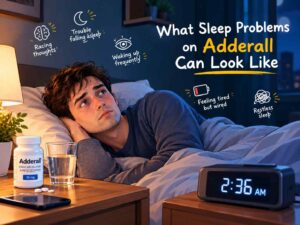
Sleep trouble isn’t one single experience. Recognizing your pattern makes it easier to describe to a professional.
- Trouble falling asleep: You go to bed on time but stay awake far longer than usual.
- Waking in the night: You drop off fine but wake repeatedly, or can’t get back to sleep.
- A delayed sleep schedule: You don’t feel sleepy until late, and mornings become a struggle.
- Bedtime restlessness: Your body is ready to rest but your mind or muscles feel alert.
- Daytime tiredness: After a poor night, you feel foggy, irritable, or less focused.
Some people also notice teeth grinding or jaw clenching at night. If it happens often or causes jaw pain, mention it to your healthcare professional or dentist.
Persistent sleep problems deserve attention, especially if they affect your job, studies, mood, or driving safety.
Does Adderall XR Affect Sleep Differently Than Immediate-Release?

They can, because their release patterns differ.
Immediate-release Adderall generally acts for a shorter period and is sometimes prescribed in divided doses. Adderall XR is typically taken once in the morning and provides coverage across more of the day. That longer coverage is helpful for many people, but for someone who is sensitive to stimulant-related insomnia, it can sometimes extend alertness further into the night.
Neither form is automatically better for sleep. The right choice depends on your symptoms, your daily schedule, how you respond, and your medical history. If you think your formulation is part of the problem, raise it at your appointment rather than switching on your own.
How to Support Better Sleep While Taking Adderall
Improving Adderall and sleep-related difficulties often starts with a consistent bedtime routine and a review of your medication schedule with your prescriber.
Keep a steady sleep schedule
Try to go to bed and wake up at roughly the same times every day, weekends included. A predictable rhythm helps your body know when to wind down. Big gaps between weekday and weekend bedtimes can make settling in harder.
Also, pick a bedtime that gives you a real chance to rest, rather than waiting until you’re completely exhausted.
Talk through medication timing with your prescriber
If you regularly struggle to fall asleep, this is the single most useful conversation to have. Your clinician may look at your formulation, dose, schedule, and the time of day your symptoms return, then decide whether any adjustment makes sense for you.
Please avoid taking an extra dose to push through the day, taking your medication later than directed, or stopping suddenly because of poor sleep.
Pull back on caffeine later in the day
Coffee, tea, energy drinks, and some sodas all contain caffeine. Pairing caffeine with a stimulant medication can add to jitteriness and make sleep more difficult. Consider cutting back in the afternoon and evening, and mention your usual intake to your clinician. Sensitivity varies, and for some people even a morning-after-lunch cup matters.
Build a calm wind-down routine
Give your brain a runway. Reading, a warm shower, quiet music, or slow breathing can signal that the day is ending. Keep the bedroom dark, cool, and quiet when you can, and avoid demanding work or stimulating conversations right before bed if you’ve noticed they keep you wired.
Dial back bright screens
Phones, laptops, and televisions keep your mind engaged when it should be settling. Put devices away earlier or lower the brightness. The goal isn’t perfection. It’s a routine that leaves you feeling calm.
Move your body, but mind the timing
Regular activity such as walking or cycling supports healthy sleep. If intense exercise leaves you energized, schedule it earlier in the day rather than close to bedtime.
Keep a simple sleep diary
This is one of the most underrated tools I know of. For one to two weeks, jot down:
- What time you take your prescribed medication
- When you go to bed and roughly how long it takes to fall asleep
- How often you wake overnight
- When you get up in the morning
- Your caffeine intake and any side effects you notice
Bring it to your appointment. Patterns that feel vague in your head often become obvious on paper, and it gives your clinician real data to work with.
Should You Use Sleep Aids With Adderall?
Please check with a healthcare professional or pharmacist before trying any sleep aid. That includes over-the-counter products, sedating antihistamines, melatonin, and herbal supplements.
Some options may be appropriate for certain people, but they can cause side effects or interact with other medications. There’s another concern too: covering up stimulant-related insomnia with a second product may leave the underlying cause untouched. If you find yourself relying on something every night to fall asleep after your dose, that’s a sign to book a review, not to keep managing alone.
What Happens When You Don’t Get Enough Sleep?
One rough night mostly means a groggy next day. Ongoing short sleep is a different story. You may notice:
- Trouble concentrating, even though you’re taking your ADHD medication
- More irritability or mood swings
- Lower motivation and daytime energy
- Difficulty remembering information or finishing tasks
- Everyday responsibilities feeling heavier than usual
This can turn into a loop: poor sleep makes the day harder, while medication-related alertness makes the night harder. If that cycle sounds familiar, speak with your prescriber. They can look at your treatment and consider other contributors, including insomnia, anxiety, or a separate sleep disorder.
One more thing worth saying plainly: needing less sleep is not a sign your treatment is working better. Rest remains essential for both physical and mental health.
When Should You Contact a Healthcare Professional?
Reach out to your prescriber if you:
- Regularly struggle to fall asleep or wake often during the night
- Feel unusually restless
- Have daytime tiredness that disrupts your routine
- Noticed sleep problems begin after starting treatment or after a dose change
Seek urgent medical attention for chest pain, fainting, severe shortness of breath, or a rapid or irregular heartbeat with concerning symptoms. Severe agitation, hallucinations, or sudden, serious changes in behavior also need prompt assessment.
If you think you’ve taken more than your prescribed amount, contact emergency services or your local poison information service right away.
Frequently Asked Questions About Adderall and Sleep
Can Adderall cause insomnia even when taken exactly as prescribed?
Yes. Trouble sleeping is a recognized effect and can happen even when the medication is used correctly. If it continues, talk to your prescriber about your symptoms and the options available.
How long before bed should I stop taking Adderall?
There’s no single answer, because it depends on your formulation, prescription, and individual response. Follow your prescribed instructions, and ask your clinician whether your schedule needs a review.
Can Adderall make you feel tired instead of alert?
Sometimes. Some people feel fatigued while on stimulants, and others feel tired as the effect fades. Poor sleep, other medications, and underlying health conditions can contribute too. Unusual or lasting tiredness is worth discussing with a professional.
Will my sleep improve as my body adjusts?
For some people, side effects ease with time, but there’s no guarantee. If sleep problems persist or worsen, contact your prescriber rather than waiting it out.
Can I skip a dose on nights when I can’t sleep?
Please don’t change your schedule without medical guidance. Your prescriber can explain what to do about missed doses or treatment breaks and how to manage sleep-related effects safely.
Does Adderall affect everyone’s sleep the same way?
No. Individual sensitivity, formulation, timing, caffeine intake, and existing sleep issues all shape the response. Some people notice almost no change, while others notice a lot.
Final Thoughts
Adderall can make a real difference for people living with ADHD, but its stimulant nature means sleep deserves attention too. Trouble falling asleep, waking at night, and dragging through the morning are all worth raising, especially when they last.
Start by working out what’s contributing: your dose timing, caffeine, bedtime habits, stress, or something else entirely. Steady routines help many people, but they don’t always solve medication-related insomnia on their own. If your sleep has shifted since you started treatment, bring your sleep diary and your questions to your healthcare professional.
The aim isn’t just to stay sharp during the day. It’s to build a treatment plan that supports your focus and gives your body the rest it needs.